For multi-unit restaurant brands, the gap between scheduled labor and actual labor cost is where profitability silently erodes.
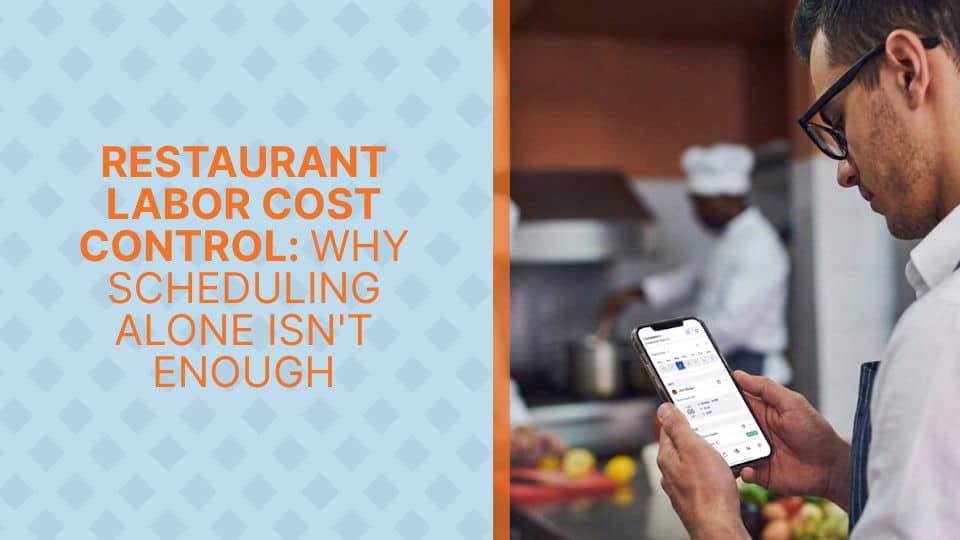
Restaurant labor cost control is not a scheduling problem. Most operators already invest in scheduling tools, build labor targets into their weekly plans, and coach managers when numbers drift. Yet labor remains one of the most persistent margin leaks across multi-unit portfolios.
The reason is structural. Everything that happens after the schedule is published operates in a separate system, on a separate timeline, and surfaces problems only after damage compounds.
The Real Cost of Labor Variance Across Locations
A 30-location brand running $2M in annual revenue per location with a 28% labor target has budgeted $560,000 per location in annual labor costs. A 1.5 percentage point drift above that target erodes $30,000 per location annually. Across 30 locations, that is $900,000 in EBITDA that disappears not from poor strategy or bad hiring, but from execution gaps no one catches in time.
Traditional restaurant scheduling software surfaces this problem too late. Managers see last week’s variance on Monday morning. By then, the pattern has already repeated across dozens of shifts. The scheduling tool has no connection to the systems tracking actual clock-ins, intraday sales volume, or real-time labor-to-revenue ratios throughout the day.
What Effective Restaurant Labor Cost Management Requires
Closing the gap between scheduled and actual labor cost requires three capabilities working together: accurate demand forecasting that adjusts labor plans before a shift begins, real-time tracking that compares scheduled versus actual hours as the day unfolds, and cross-location visibility so regional leaders can identify which locations are trending over budget before the week closes.
SynergySuite’s Labor and Scheduling module connects scheduling directly to live sales data, so labor-to-revenue ratios update continuously, not in Monday’s report. When a location’s lunch volume runs 20% below forecast, the system flags overstaffing immediately, giving managers the opportunity to adjust before the shift ends rather than explaining variance a week later.
This is the architectural advantage described in The Restaurant Tech Decision That Separates 20-Location Brands from 100-Location Empires: unified data enables decisions in real time, while disconnected tools produce explanations after the damage is done.
AI Forecasting: The Upstream Fix for Labor Variance
Labor variance rarely originates on the floor. It starts with an inaccurate forecast. When projected volume runs 15% higher than actual traffic, the schedule carries excess staff that the day’s revenue cannot absorb. Managers respond inconsistently, some sending staff home early, others maintaining full coverage to protect service quality. Neither approach connects back to the financial target.
AI-powered forecasting eliminates this upstream error by analyzing historical sales patterns, local events, weather data, and recent demand trends to generate labor recommendations before the schedule is built. The result is a schedule calibrated to anticipated demand at a level of precision that manual forecasting cannot match at scale.
For brands already managing multi-location performance gaps, forecast accuracy compounds across every unit. A meaningful improvement in forecast precision across 30 locations does not produce a proportional improvement in labor cost. It creates a structural shift in how consistently every manager can staff to revenue, week after week.
From Reactive Reporting to Proactive Labor Control
The brands gaining the most ground on labor cost are not those with the strictest managers or the most detailed schedules. They are the brands that have unified forecasting, scheduling, and analytics into a single workflow that surfaces problems before they compound.
When restaurant labor cost management becomes proactive rather than reactive, the dynamic shifts entirely. Managers stop defending variance and start preventing it. Regional leaders stop reviewing last week’s damage and start identifying next week’s exposure. Finance stops reconciling reports from disconnected systems and starts analyzing true performance across the portfolio, exactly the visibility that restaurant reporting and analytics delivers when all operational data flows through a unified platform.
That is not a scheduling upgrade. It is an operational transformation that pays for itself in the first quarter.
How SynergySuite Solves the Labor Cost Problem
SynergySuite gives multi-unit restaurant operators a single platform that connects AI demand forecasting, real-time scheduling, and cross-location analytics. Labor targets set at the corporate level cascade automatically to every location. Managers see live labor-to-sales ratios during the shift. Regional leaders receive variance alerts before shifts close. And finance teams access accurate, portfolio-wide labor data without manual reconciliation.
The platform integrates directly with POS systems, payroll providers, and accounting software, so labor cost data is never siloed. From forecast to schedule to final clock-out, every data point flows through one system built for multi-unit scale.
See how SynergySuite closes the gap between scheduled labor and actual cost across your entire portfolio.