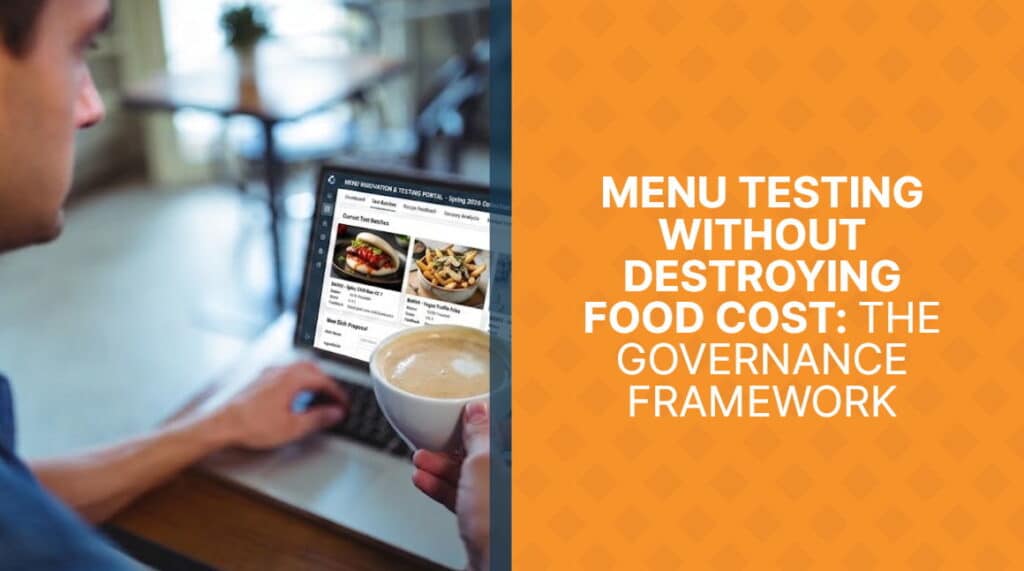
Uncontrolled Menu Innovation Can Spike Food Cost 5 to 8 Percentage Points Before the First Guest Order
A 90-day menu test should generate insights, not losses. But for multi-unit restaurant brands testing new items without systematic cost controls, food cost routinely spikes 5 to 8 percentage points before a single item appears on the permanent menu. The problem is not creative ambition. It is the absence of governance that validates profitability before items reach kitchens. When menu innovation software includes automated gates, test periods protect margins instead of destroying them.
What Uncontrolled Testing Actually Costs
A culinary team develops three new entrees for a spring refresh. Guest feedback in early tastings is strong. Leadership approves a 90-day test across 10 locations. Three predictable failures follow.
The grilled salmon dish was costed at $4.20 using standard Atlantic salmon. Procurement sources premium Scottish salmon at $6.80 per portion. No one catches the discrepancy before launch. The pasta dish specifies 6 oz of protein, but line cooks plate 8 to 9 oz during dinner rush. Food cost climbs from a targeted 26% to an actual 34%. The vegetarian bowl relies on seasonal vegetables; supply disruptions force ingredient swaps mid-test without any cost recalculation, and the dish starts losing money on every plate.
Each failure compounds across every location, every week, for the full test duration. When items with unresolved cost problems roll out portfolio-wide because guest scores were strong, the variance scales to every location for the full menu cycle. A single percentage point of food cost variance across a 50-location brand operating at $2.5M per location destroys $1.25M in annual EBITDA. Governance prevents that scenario before rollout makes it permanent.
How Governance Architecture Enforces Profitability Gates
Menu testing governance means items cannot reach kitchens until they clear automated profitability checks. It is not about restricting creativity. It is about confirming that innovative dishes will make money before guests order them. The recipe testing platform creates three gates:
Gate 1: Recipe Cost Validation
Before any item enters testing, the system calculates cost using current supplier pricing pulled directly from purchasing systems, not figures from months prior. The salmon dish gets blocked immediately. Recipe specs list $4.20; current pricing shows $6.80. Culinary reformulates or adjusts menu price before the item proceeds.
Gate 2: Margin Enforcement
Each brand sets minimum margin thresholds by category. The system will not release recipes to test kitchens if calculated margins fall below those standards. The vegetarian bowl clears Gate 1 at a 74.6% margin, but the entree threshold is 75%. Culinary adjusts before testing begins.
Gate 3: Portion Control Monitoring
The menu innovation software monitors actual ingredient usage against recipe specs throughout the test. If the pasta dish calls for 6 oz protein but kitchens plate 8 oz, variance alerts trigger within 72 hours. Kitchen managers receive automated notifications and can correct immediately, not at month-end reconciliation.
Items that pass all three gates enter testing with validated profitability. Items that fail get reformulated before they reach a kitchen. The system enforces brand standards without requiring constant manual intervention.
Real-Time Protection Throughout the Test
Governance architecture adapts continuously rather than discovering problems after the test concludes. When asparagus prices spike mid-test, the veggie bowl’s recipe cost recalculates automatically. If the updated cost drops below the margin threshold, the system alerts culinary directors immediately so they can substitute ingredients or revise pricing before losses compound.
Cross-location restaurant performance analytics compare actual usage against specs across all test sites simultaneously. Locations executing to spec become training models for those drifting. That is active governance, not retrospective reporting.
Portfolio-Wide Rollout Protection
The most critical gate is the rollout decision itself. Governance adds a third requirement beyond guest scores and sales volume: validated profitability across all test sites. A dish that performs well with guests but shows consistent portion drift at multiple locations does not proceed until the root cause is resolved and compliance is verified across the board.
Governance Protects Margins. Open Testing Erodes Them.
SynergySuite eliminates each failure point that uncontrolled testing creates. Live supplier pricing pulled from purchasing integrations validates recipe costs before any item reaches a test kitchen, catching a $4.20 salmon costed at $6.80 on day one, not week four. Automated margin thresholds enforce brand standards at every gate without requiring manual review from culinary directors or finance. Portion control monitoring compares actual usage against recipe specs across all test locations in real time, triggering alerts within 72 hours instead of waiting for month-end reconciliation. And when it comes time to approve rollout, the platform requires validated profitability across all test sites, not just strong guest scores and solid sales volume.
The result: culinary teams keep the creative freedom to innovate. Finance teams keep the margin protection the business requires. And multi-unit operators avoid the $900,000+ in EBITDA destruction that a single uncontrolled menu cycle can produce across a 50-location portfolio.
See how SynergySuite governance protects margins across every menu refresh cycle.