When Staffing Changes, Financial and Operational Risk Increases
Seasonal volume spikes. Ongoing hiring challenges. Turnover rates approaching 79% annually across the restaurant industry. For multi-unit restaurant organizations, staffing instability is no longer an occasional disruption. It’s a permanent operating condition.
Yet guest expectations, brand standards, and regulatory requirements don’t adjust when teams are short-staffed or inexperienced.
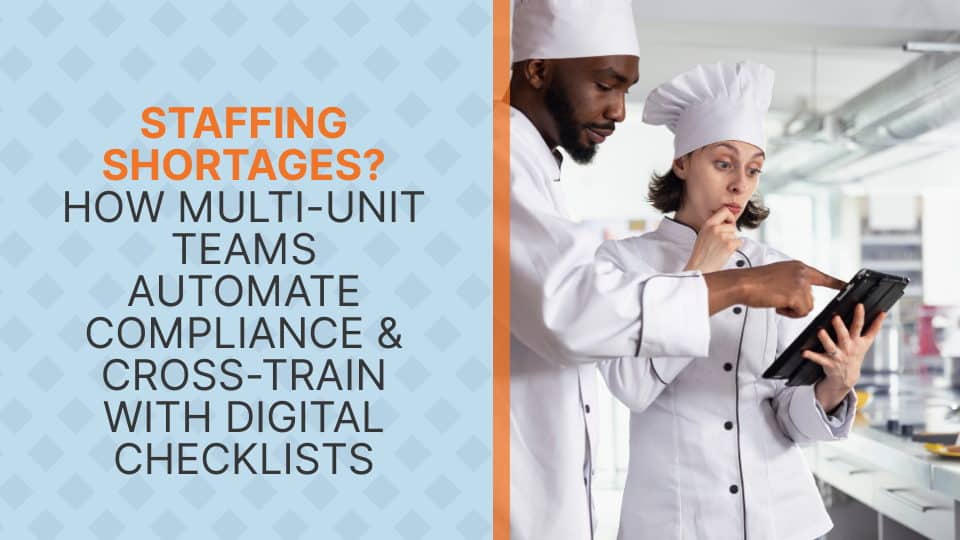
That reality is pushing leading restaurant brands to adopt digital checklists for restaurants, not just as operational tools, but as systems that automate compliance, standardize execution, and reduce risk during periods of constant workforce change.
The Hidden Cost of Staffing Volatility and Paper-Based Processes
Staffing shortages don’t just strain managers. They create financial and compliance exposure.
Paper-based checklists and manual training processes introduce blind spots that grow during high-turnover periods:
- Opening and closing tasks go incomplete or undocumented
- Food safety and cash-handling steps vary by shift or manager
- Training quality differs widely between locations
- Compliance gaps remain invisible until an inspection or audit
These issues rarely surface immediately on a P&L, but their downstream impact is real: increased waste, preventable errors, audit risk, and inconsistent guest experiences that erode brand value.
Digital checklist systems replace fragmented, paper-based workflows with automated accountability that scales across every location, regardless of who is working that shift.
How Digital Checklists Reduce Risk and Maintain Standards at Scale
Modern digital checklist platforms embed operational and compliance controls directly into daily workflows.
With digital checklists for restaurants, multi-unit teams can:
- Automatically assign tasks by role, shift, or daypart
- Reset checklists dynamically as staffing or schedules change
- Track task completion in real time across all locations
- Receive alerts when critical steps are missed or overdue
- Maintain a time-stamped, user-attributed audit trail without manual effort
This isn’t simply digitizing clipboards. It’s creating a system of record for operational execution, one that protects brand standards and compliance even when staffing is unpredictable.
Cross-Training at Scale Without Overloading Managers
When turnover spikes or seasonal hiring accelerates, training often becomes inconsistent and overly dependent on a small group of experienced managers.
Checklist-driven training and onboarding solve this problem by making knowledge repeatable and accessible.
New team members can:
- Follow step-by-step task walkthroughs
- Access mobile SOPs, training videos, and visual guides
- Receive immediate feedback and progress tracking
Managers gain:
- Visibility into individual training progress
- Shorter onboarding timelines
- Confidence that procedures are executed consistently
The result is faster time-to-productivity and reduced reliance on senior staff, especially during peak periods.
Measurable Results for Multi-Unit Restaurant Brands
Multi-unit operators using digital checklists consistently report improved consistency, visibility, and control across their locations.
At Tropical Smoothie Café, franchisees use SynergySuite’s checklist tools to maintain standardized execution across a rapidly growing system, regardless of staffing fluctuations.
Similarly, Shipley Do-Nuts has transformed franchise operations through digital checklist implementation. “Our franchises were fragmented, using lots of different solutions. We needed a tech partner that was stable and easy to build from. SynergySuite was that partner,” said Kerry Leo, VP of Technology at Shipley Do-Nuts.
By centralizing task management, training, and compliance documentation, brands reduce operational fragmentation while increasing confidence in daily execution.
Why Digital Checklists Matter for Compliance and Leadership Teams
For operations, training, and compliance leaders, the biggest challenge isn’t task definition. It’s visibility.
When leaders can’t see what’s happening in real time across 20, 50, or 100+ locations, issues remain hidden until they become costly.
Digital checklist systems close that gap by:
- Standardizing food safety, cash handling, and brand SOPs
- Creating auditable documentation for inspections and franchisor requirements
- Providing real-time insight into execution across regions and stores
This turns operational playbooks into living systems, executed consistently regardless of who is on shift.
Building Operational Resilience in a High-Turnover Industry
Industry data shows that 77% of restaurant operators rank recruitment and retention as their top operational concern, with nearly 3 million hospitality workers leaving roles in early 2024 alone.
This makes operational resilience, not just hiring, critical to long-term success.
Digital checklists help restaurants:
- Reduce human error through standardized processes
- Surface issues early through real-time visibility
- Automate task tracking and corrective action workflows
When systems carry the institutional knowledge, staffing volatility becomes manageable instead of destabilizing.
Turn Staffing Challenges Into a Competitive Advantage
Turnover will remain high. Seasonal fluctuations will continue. Competition for labor will intensify.
The differentiator isn’t avoiding these realities. It’s whether your systems are built to withstand them.
Digital checklist automation removes friction from compliance enforcement, training delivery, and quality assurance. It ensures standards are upheld across every store, every shift, and every season, regardless of staffing conditions.
See how SynergySuite helps multi-unit restaurant teams automate compliance, scale training, and maintain operational standards during workforce change.