For restaurant CFOs, menu decisions are financial decisions.
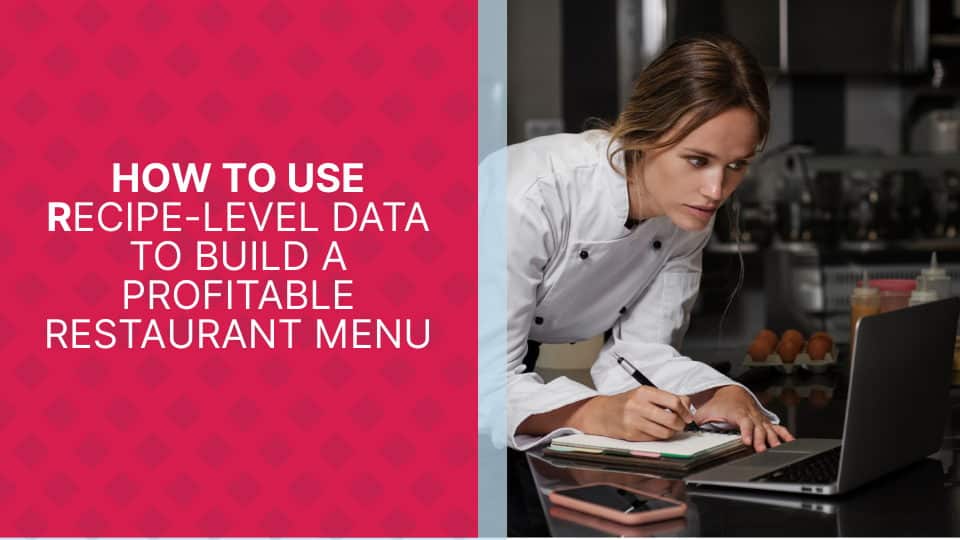
Every price point, portion size, and ingredient choice flows directly into margin performance, yet many multi-unit restaurant organizations still build menus using incomplete or outdated data. POS reports show what sells. Spreadsheets estimate food cost. But neither tells you what each menu item actually contributes to profit today.
Without real-time, recipe-level costing, finance teams are forced to approve pricing and menu strategies based on assumptions. They often discover margin erosion only after it appears in the P&L.
Recipe-level data changes that equation by giving CFOs the visibility needed to model margin impact before decisions are made, not after.
Why Recipe-Level Costing Is Essential to Profitable Menu Strategy
High sales volume doesn’t guarantee profitability. A top-selling menu item can quietly drain margin if ingredient prices increase, portion sizes drift, or execution varies by location.
Many restaurant brands operate with food cost targets between 28–35% without clear insight into why certain items overperform or underperform financially. Without recipe-level costing, finance leaders lack the granularity needed to manage margin proactively.
Modern restaurant menu engineering software solves this by connecting three critical data sources into a single financial view:
- Supplier integration that updates ingredient costs automatically as invoices are processed
- Real-time inventory tracking that compares actual usage to theoretical recipe cost, revealing waste and portion variance
- POS integration that ties sales volume directly to contribution margin by item, location, daypart, or channel
The result is a dynamic, continuously updated view of menu profitability. Not a static spreadsheet that’s outdated as soon as costs change.
Real-Time Data Enables Predictable Margin Improvement
When finance teams can see true contribution margin at the recipe level, opportunities for improvement become immediately actionable.
CFOs can:
- Identify items with strong sales but weak margin contribution
- Detect margin erosion caused by supplier price increases or portion creep
- Model ingredient substitutions or portion adjustments before rolling out changes
- Validate whether promotional pricing supports or undermines margin goals
Melissa Jackson, COO of a Tropical Smoothie Cafe franchise group, illustrates the financial discipline enabled by real-time data: “We review our variances weekly and put action plans in place immediately. We hit a record 26.5% food and paper cost across our entire organization.”
For finance leaders, this level of control doesn’t come from retrospective reporting. It comes from continuously updated recipe, inventory, and purchasing data aligned to financial targets.
Menu Engineering as a Margin Protection System
For CFOs, data only matters if it drives action.
Recipe-level intelligence turns menu engineering into a margin protection system by providing:
- Automated COGS reporting by menu item and ingredient
- Visibility into contribution margin trends over time
- Early warnings when rising costs threaten profitability
- Support for pricing adjustments based on real cost drivers
This allows finance teams to collaborate more effectively with Culinary and Operations; grounding creative and operational decisions in financial reality without slowing innovation.
One Version of the Truth Across Finance, Culinary, and Operations
Discrepancies between corporate recipes and in-store execution are a hidden source of margin leakage.
Mobile-first, centralized platforms ensure:
- Corporate finance, culinary, and store teams work from the same recipe data
- Updates to portions, ingredients, or pricing are reflected immediately across locations
- Managers on the line and executives in the boardroom see identical cost assumptions
This alignment reduces variance, simplifies forecasting, and reinforces accountability across the organization.
From Menu Guesswork to Financial Precision
A profitable menu isn’t built once, it’s continuously optimized.
With automated recipe costing and real-time performance data, every menu item becomes a financial instrument that can be measured, tested, and refined. Pricing aligns with margin targets. Portions stay consistent. Ingredient changes are evaluated before they impact the P&L.
The real risk today isn’t investing in recipe-level visibility, it’s continuing to make menu decisions without it while competitors quietly protect and expand their margins.
Turn Your Menu Into a Financial Advantage
SynergySuite helps restaurant finance teams transform menu strategy into a predictable, controllable driver of profitability. Our platform automatically connects recipes, inventory, purchasing, and sales data to deliver real-time insight into contribution margin across every location.
See how leading restaurant brands use SynergySuite to reduce variance, control food costs, and align menu decisions with financial outcomes.
Build menus with margin confidence.