For CFOs and Purchasing Directors, Static Recipe Costs Turn Overnight Price Spikes Into Month-Long Blind Spots
Restaurant operators face a daily reality: supplier prices change without warning. A protein vendor raises beef prices Tuesday morning. A produce distributor adds fuel surcharges mid-week. Dairy costs jump because of regional shortages. These changes happen constantly, yet most restaurants discover them weeks later during month-end reconciliation.
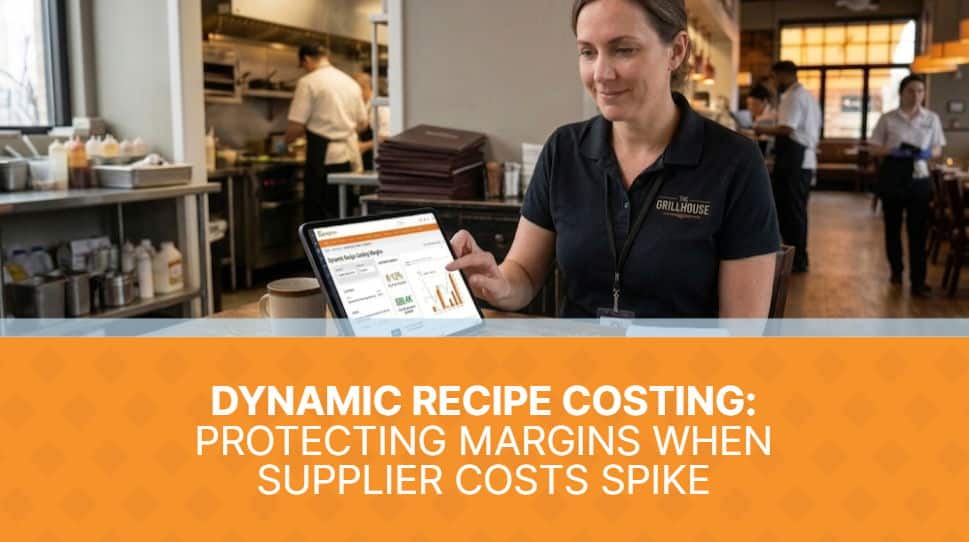
The problem isn’t the price increases themselves. Markets fluctuate. Suppliers adjust. That’s expected. The problem is operating blind for 30 days while selling menu items at outdated costs. When your recipe costing system shows beef at last quarter’s pricing but you’re actually paying 12% more today, every steak sold quietly erodes margin. Dynamic recipe costing restaurant systems close this visibility gap by updating costs automatically as supplier invoices arrive, not weeks later during financial close.
When Price Changes Hide in Plain Sight
A casual dining brand serves a popular steak entree. Last quarter, the culinary team costed the dish at $8.40 based on contracted beef pricing. They set the menu price at $24.95, targeting a healthy margin. The item sells well and accounts for nearly 20% of dinner revenue.
Then Monday arrives with a surprise. The beef supplier’s new invoice shows a 12% price increase. Supply chain pressures. Market conditions. The reasons don’t matter as much as the new reality: beef now costs $9.41 per portion, not $8.40.
Here’s where static costing creates problems. The recipe costing spreadsheet still shows $8.40 because nobody has updated it yet. Kitchen managers don’t know about the increase. The operations team doesn’t know. Even purchasing might not notice immediately if they’re processing dozens of invoices weekly. The restaurant keeps selling steaks, assuming the old cost structure.
Four weeks pass. The finance team closes the month and reconciles actual costs against budget. That’s when they discover the beef price spike. But by then, the restaurant has already sold over 4,000 steaks using outdated cost assumptions. What looked like a 34% food cost was actually running at 38%.
The real challenge isn’t the price increase itself. Operators can adjust to higher costs through menu pricing, portion control, or supplier negotiations. The challenge is the 30-day delay between when costs change and when the restaurant realizes it. According to Restaurant Dive’s 2025 analysis, most operators face constant ingredient price volatility, making this visibility gap a recurring problem, not a one-time event.
How Automatic Updates Change the Response Timeline
Imagine the same Monday morning scenario, but with a different system in place. The beef supplier’s invoice arrives showing the 12% price increase. As the system processes the invoice, it recognizes the beef SKU and immediately checks which recipes use it. The steak entree gets flagged. The system recalculates the recipe cost from $8.40 to $9.41.
Within hours, not weeks, the purchasing director receives an alert on their phone: “Steak Entree: supplier cost increase detected. Current margin below brand threshold. Review required.”
The purchasing team can now respond while the information is fresh. They check if this is a permanent increase or temporary spike. They contact alternative suppliers to compare pricing. They loop in the culinary director to discuss options. By Tuesday afternoon, the team has several paths forward:
Option 1: Accept the slightly reduced margin. Run the numbers and decide if 62% margin is still acceptable versus the target 65%. Many items operate profitably below target during temporary cost spikes.
Option 2: Adjust the menu price modestly. A $1 increase to $25.95 restores the target margin without dramatically changing guest perception.
Option 3: Reduce the portion slightly. Moving from 10 oz to 9 oz maintains both price and margin while still delivering a satisfying guest experience.
Option 4: Source from an alternative supplier. If another vendor offers comparable quality at lower cost, switch suppliers for this ingredient.
The decision gets made Tuesday. Changes implement Friday. The restaurant operates with accurate cost information for nearly the entire month instead of running blind for 30 days. According to Supy’s 2025 food inflation guide, operators using ingredient price tracking systems gain this critical response time, allowing proactive decisions instead of reactive damage control.
Seeing Across All Locations Simultaneously
Multi-location operations face an additional challenge: different locations often pay different prices for the same ingredients. Location 14 might pay $6.80 for chicken breast through their regional distributor. Location 22 pays $7.40 for identical product because they use a different vendor. Without centralized visibility, these pricing discrepancies can persist for months.
When costs update automatically across a connected system, these variances become visible immediately. The automated cost tracking compares pricing across all locations and surfaces the differences. A purchasing director reviewing the dashboard notices: “Chicken breast: Location 22 paying 8.8% above portfolio average.”
This prompts investigation. Maybe Location 22’s distributor quietly raised prices without notification. Maybe they’re not getting the corporate contract rate. Maybe they switched to a premium supplier without approval. Whatever the cause, the purchasing team can now address it. They renegotiate with the distributor, switch to the portfolio-preferred vendor, or adjust that location’s recipes if they’re legitimately using higher-quality product.
According to research on restaurant costing software, operators managing multiple locations benefit most from centralized systems that standardize pricing visibility across all units. This prevents the common scenario where identical menu items show wildly different profitability by location simply because each unit operates with different supplier relationships and no one has a consolidated view.
The operational benefit extends beyond just catching pricing discrepancies. When a supplier raises prices, the system updates recipe costs for all affected locations simultaneously. Corporate purchasing sees the portfolio-wide impact immediately. They can make strategic decisions: negotiate better rates using total volume as leverage, source alternative suppliers for all locations at once, or adjust menu pricing consistently across the brand.
Responding to Supply Chain Disruptions
The most critical test of any costing system comes during supply chain crises. When COVID disrupted meat processing, proteins spiked dramatically. When avian flu hit, egg prices tripled overnight. When recent tariffs affected seafood imports, specialty fish costs doubled. These aren’t theoretical scenarios. They happen regularly.
Static recipe costing systems discover these crises 30 days later during month-end reconciliation. By then, restaurants have been selling affected items at a loss for weeks, and the window for proactive response has closed.
Consider a typical crisis response with traditional systems. A seafood supplier invoice arrives Tuesday showing salmon prices nearly doubled. The invoice gets filed. Nobody flags it immediately because processing involves dozens of invoices weekly. Thirty days pass. Month-end close reveals the problem. Finance alerts operations. An emergency meeting gets scheduled. The team researches alternatives. Decisions get made. Changes roll out to locations. By the time the response completes, six weeks have elapsed since the price spike occurred.
Now consider the same crisis with dynamic costing. Tuesday morning, the salmon invoice arrives. The system processes it and immediately recalculates all salmon-containing recipes. Within hours, a priority alert reaches the culinary director and purchasing team: “6 menu items critically impacted by salmon cost increase. Immediate review required.”
By Wednesday, culinary reviews alternatives. Purchasing contacts backup suppliers to check availability and pricing for substitute proteins. By Thursday, the team decides to temporarily switch to mahi-mahi, which costs more than original pricing but far less than current salmon rates. Friday morning, the recipe updates deploy to all locations. Kitchen managers receive the updated specs through their tablets. The weekend service runs with the new configuration.
The entire response cycle completed in four days. According to case study data, Grupo QZCR operating 20 Quiznos locations faced this exact challenge with constantly changing supplier prices. After implementing live recipe costing tied to purchasing software, they gained the visibility needed to respond to price volatility quickly, ultimately improving their cost management across all locations.
The Verdict: Visibility Determines Response Speed
Supplier prices change constantly. Beef, seafood, produce, dairy all fluctuate based on supply chains, weather, tariffs, and market conditions. Static recipe costing treats these changes as quarterly events to be discovered during reconciliation. Dynamic systems treat them as daily operational realities requiring immediate visibility.
The difference isn’t just accounting methodology. It’s operational capability. When price changes happen Tuesday and the restaurant discovers them the same week, teams can respond strategically. They can evaluate alternatives, negotiate with suppliers, adjust recipes, or modify menu pricing while the situation is still fresh. When price changes happen Tuesday and the restaurant discovers them 30 days later, the only option is reactive damage control.
Multi-unit operators benefit most from this visibility because price changes affect multiple locations simultaneously. A beef price spike doesn’t just impact one kitchen. It impacts dozens. The ability to see portfolio-wide cost changes immediately and coordinate a unified response makes the difference between proactive management and reactive crisis mode.
The technical requirement is integration between ingredient price tracking and recipe management systems. When supplier invoices, recipe specs, and menu pricing connect in real time, costs update automatically. The margin protection software eliminates the visibility gap between market reality and internal assumptions.
For purchasing directors and CFOs managing volatile food costs, the question isn’t whether supplier prices will change. They will. The question is whether your organization learns about those changes in days or discovers them weeks later during financial close.
📅 Stop Flying Blind on Food Costs. See your actual recipe profitability across all locations in one dashboard.