For CFOs in multi-unit restaurant organizations, the hardest part of the job isn’t reporting on what already happened. It’s predicting what will happen next.
Food costs fluctuate. Labor availability shifts. Promotions don’t land evenly across regions. And by the time variances show up in a P&L, the opportunity to correct course has often passed.
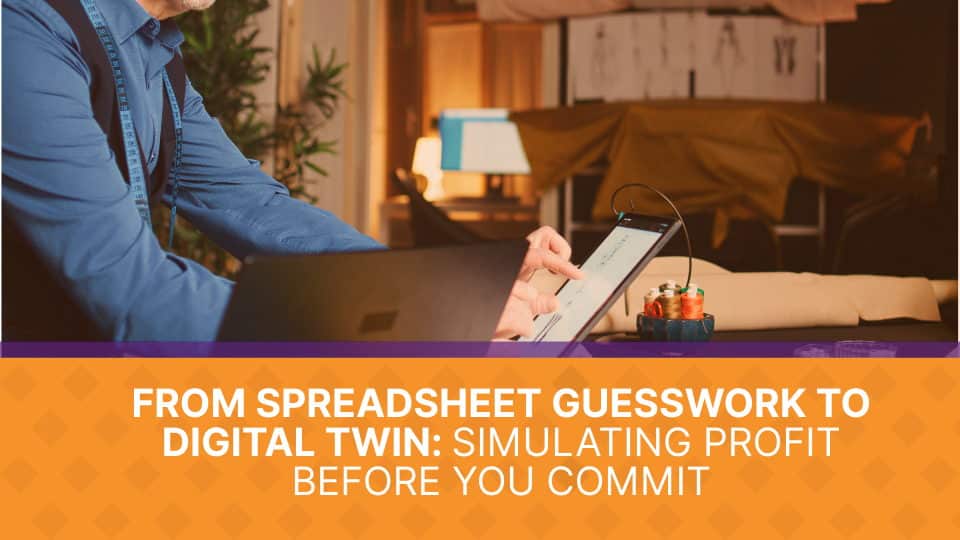
That’s why leading restaurant finance teams are moving beyond static spreadsheets and backward-looking reports toward digital twin restaurant operations, a transformative approach to restaurant profitability forecasting that models the financial impact of operational decisions before they’re rolled out across the business.
Instead of reacting to margin erosion, digital twins allow CFOs to simulate profit outcomes in advance, bringing financial predictability to an industry built on thin margins.
What Digital Twin Restaurant Operations Mean for Restaurant Finance
In practical terms, a digital twin is a live, continuously updated financial and operational model of your restaurant business.
Unlike traditional food cost forecasting software that relies primarily on historical averages, a digital twin mirrors what’s happening across your organization in near real time, pulling data from POS systems, inventory, suppliers, labor schedules, and financial systems into a single simulation layer.
For finance leaders, this means you can answer critical questions before they hit the P&L:
- What is the EBITDA impact of reducing prep labor on low-volume weekdays?
- How will a supplier price increase affect margin by region or concept?
- Can a limited-time offer be rolled out profitably in certain markets and avoided in others?
- What happens to food variance and throughput if recipes or portion sizes change?
These answers come from modeled outcomes, not assumptions.
What Digital Twin Technology Replaces in Restaurant Margin Management
For finance teams seeking better restaurant margin management, this approach replaces:
- Annual budgets that become obsolete by February
- Static forecasts disconnected from store-level behavior
- After-the-fact variance explanations instead of prevention
- Reconciling data across disconnected systems instead of analyzing it
This positions digital twin restaurant operations as the antidote to spreadsheet-heavy FP&A and retrospective reporting that leaves CFOs constantly explaining misses rather than preventing them.
Why Digital Twin Technology and AI Forecasting Matter to Restaurant CFOs Now
Move From Explaining Variance to Preventing It With Restaurant Profitability Forecasting
Most restaurant finance teams spend a significant amount of time explaining why numbers missed expectations. Digital twin simulation flips that equation by allowing CFOs to pressure-test decisions in advance.
By modeling labor adjustments, inventory changes, menu pricing updates, or promotional strategies ahead of execution, finance leaders gain clarity on downstream margin impact without risking real-world disruption.
The result: fewer surprises, tighter forecasts, and more confident decision-making at the executive and board level.
Forecast Restaurant Profitability, Not Just History
Traditional restaurant forecasting is largely retrospective. While historical trends and seasonality still matter, they often fail to capture the variables that drive margin today: local events, weather, supplier volatility, traffic shifts, and promotional timing.
AI forecasting for restaurants through digital twins incorporates real-time operational data alongside machine learning algorithms to create living forecasts that adjust as conditions change.
For CFOs, this means:
- Forecasts that stay relevant throughout the quarter
- Better alignment between finance, operations, and supply chain
- Clear visibility into actuals vs. forecast by location, daypart, and concept
One Source of Truth for Restaurant Margin Management and Cost Control
When labor, inventory, purchasing, and financial reporting live in separate systems, finance teams are forced to reconcile data instead of analyzing it.
Digital twin technology brings these systems together into a unified layer where finance leaders can see cause and effect across the business, understanding how changes in one area ripple through food costs, labor spend, and overall profitability.
This isn’t integration for its own sake. It’s about giving CFOs a single source of truth for restaurant margin management and cost control.
Real-World Results: Financial Impact at Scale With Digital Twin Restaurant Operations
Multi-unit restaurant brands already leveraging unified, real-time operational data are seeing measurable financial gains.
At Costa Vida, increased visibility into inventory, variance, and unit-level performance enabled a more disciplined approach to cost control. The result: food and paper costs held to 26.5% across the system, marking a record year for the brand.
For CFOs, consistency at that level translates directly into predictable margin performance across the portfolio, not just isolated wins at individual stores.
Similarly, Tropical Smoothie Café reported 2 to 2.5% reductions in food waste after implementing comprehensive back-of-house management systems. At scale, even small percentage improvements like these represent significant profit protection when multiplied across dozens or hundreds of locations.
The common thread isn’t better reporting. It’s better financial foresight through advanced restaurant profitability forecasting.
The Infrastructure to Model Margin Decisions With Food Cost Forecasting Software Exists Today
Digital twin simulation doesn’t require experimental or speculative technology. The foundation already exists within modern restaurant management platforms that centralize operational and financial data.
Key capabilities in modern food cost forecasting software include:
- Real-time POS and sales data synchronization
- Automated invoice processing and matching
- AI-driven labor forecasting tied to actual traffic patterns
- Recipe-level costing with contribution margin visibility
- Supplier integrations that reflect real-time cost changes
When these systems operate together, finance teams gain the ability to model scenarios, forecast margin impact, and guide decisions proactively.
The Strategic Imperative for Restaurant CFOs: Adopting Digital Twin Operations
Over the next several years, the ability to simulate outcomes before executing decisions will move from competitive advantage to operational necessity.
As labor costs rise, supplier pricing fluctuates, and margins remain under pressure, CFOs who rely solely on historical data will continue playing defense. Those who adopt simulation-driven planning through digital twin restaurant operations will gain tighter control over profitability and scale with greater confidence.
The question is no longer whether finance teams need this level of insight, but how quickly they can put it into practice.
Frequently Asked Questions About Digital Twin Restaurant Operations
- What is a digital twin in restaurant operations? A digital twin in restaurant operations is a live, continuously updated virtual model of your entire restaurant business that simulates financial and operational outcomes before you implement changes across your locations.
- How does digital twin technology improve restaurant profitability forecasting? Digital twin technology improves restaurant profitability forecasting by incorporating real-time data from POS systems, inventory, labor, and suppliers to create dynamic forecasts that adjust as conditions change, rather than relying solely on historical averages.
- What is the ROI of implementing food cost forecasting software with digital twin capabilities? Leading restaurant brands report 2 to 2.5% reductions in food waste and the ability to maintain food costs at record lows (such as 26.5%) when implementing food cost forecasting software with digital twin simulation capabilities.
- How does AI forecasting for restaurants differ from traditional forecasting? AI forecasting for restaurants uses machine learning to analyze real-time operational data, weather patterns, local events, and traffic shifts to predict outcomes more accurately than traditional methods that rely primarily on historical trends and seasonal patterns.
From Reactive Finance to Predictable Profitability
Ready to move beyond spreadsheet-based forecasting and reactive margin management?
SynergySuite provides the operational and financial foundation required to support digital twin restaurant operations across multi-unit restaurant organizations. Our cloud-based, mobile-first platform unifies inventory, labor, purchasing, and financial data into a single system, giving finance leaders the clarity needed to model decisions before they impact the P&L.
See how brands like Costa Vida and Tropical Smoothie Café use SynergySuite to reduce waste, control food costs, and give their finance teams real-time visibility into profitability across every location.
Model your next margin decision with confidence.